
Hi, I'm Oliver Garrett. I live in Denver.
Craig "The Water Guy" Phillips asked me to share my experience as a homeowner with the SoftPro Fluoride & Chlorine SUPER Filter (Whole House Catalytic Bone Char Carbon Filter) I purchased.
This is how my adventures played out. I hope this helps you in your decision.
The Water Quality Nightmare That Started It All
Eighteen months ago, I was dealing with what I can only describe as a water quality disaster in my Denver home. The municipal water coming through our pipes had this persistent chemical taste that made drinking from the tap absolutely unpleasant. My wife started buying bottled water by the case, and honestly, I couldn't blame her.
The chlorine smell was so strong that guests would comment on it within minutes of walking into our house. But the real wake-up call came when I started researching what was actually in our water supply. Did you know that many municipal water systems add fluoride at levels that some homeowners prefer to reduce?
Beyond that, I discovered our local supply contained various disinfection byproducts and trace contaminants that I simply didn't want my family consuming daily.
I'd tried pitcher filters, but they couldn't keep up with our household of four. We were constantly refilling them, and the cost of replacement cartridges was adding up fast. Faucet-mounted filters helped with drinking water, but didn't address the chlorine smell throughout the house or the effects on our skin and hair during showers.
The breaking point came during a dinner party when our friend's eight-year-old daughter asked why our water "tasted funny." That night, I decided it was time for a whole-house solution that could tackle the problem at its source.
Research Phase: Diving Deep Into Water Treatment Technology
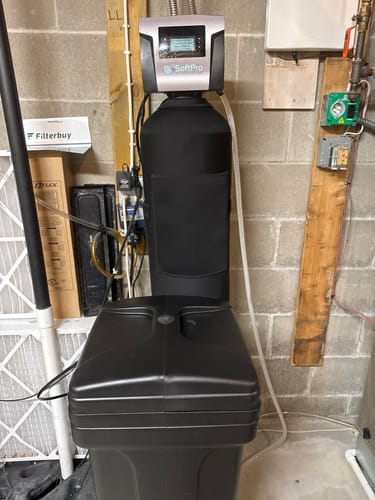
I'll be honest - before this journey, I knew virtually nothing about water filtration beyond basic carbon filters. My research phase lasted about three weeks, and I quickly learned there's a massive difference between various treatment technologies.
Initially, I looked at standard activated carbon systems, but discovered they have limitations when it comes to fluoride removal. That's when I stumbled upon catalytic carbon technology, which uses a specialized media that's more effective at breaking down Go here chloramines and other stubborn contaminants.
The bone char carbon component was completely new to me. Through my research, I learned it's particularly effective at fluoride reduction, which was becoming increasingly important to my family. Unlike synthetic materials, bone char has a unique porosity and mineral structure that targets specific contaminants.
What made the decision challenging was understanding flow rates and capacity sizing.
Our home has 2.5 bathrooms, and I needed to ensure the system could handle peak demand without creating pressure drops. The SoftPro system I was considering offered a 15 GPM flow rate, which seemed adequate for our needs based on fixture count calculations.
I also researched NSF certifications extensively. The combination of NSF/ANSI 42 and 61 standards meant the system met strict requirements for both contaminant reduction and material safety. This wasn't just marketing - these are third-party verified performance standards.
The final factor was the upflow design versus traditional downflow systems. The upflow configuration prevents channeling and ensures more complete contact between water and filter media, which translates to better contaminant removal efficiency and longer media life.
Unboxing and Initial Quality Assessment
The system arrived in professional-grade packaging that immediately impressed me. The main tank weighed significantly more than I expected - about 65 pounds - which actually gave me confidence in the build quality. You could tell this wasn't some lightweight residential filter.
The fiberglass tank construction felt substantial, with a smooth gelcoat finish that looked like it would hold up well in our basement environment. All the fittings were brass and stainless steel - no plastic components that might fail over time.
What surprised me was the quality of the included installation hardware. The bypass valve assembly was solid brass construction, and all the fittings were clearly marked for sizing compatibility. The system came with comprehensive documentation, including detailed specifications and maintenance schedules.
The control valve head was more sophisticated than I anticipated, with clear programming buttons and an LCD display showing system status. During my initial inspection, I noticed the internal distributor tube was properly positioned, and the media levels looked correct through the tank walls.
One minor disappointment was that the installation required some additional plumbing supplies not included in the kit. Nothing major - just specific pipe fittings to match my existing plumbing configuration - but it meant an extra trip to the hardware store.
Installation Experience: Easier Than Expected

I decided to tackle the installation myself, partly to save money and partly because I wanted to understand exactly how the system worked. The process took about four hours from start to finish, including the initial system startup and programming.
The first challenge was finding the right location. The system needed to be installed after the main water shutoff but before any branches to fixtures. In our basement, this meant positioning it near the water heater, where I had adequate space and access to electrical power for the control valve.
Installing the bypass valve was actually the most time-consuming part. I needed to cut into the main line and solder new connections, which required draining the entire house system first. If you're not comfortable with basic plumbing, this is definitely where you'd want to call a professional.
The system's upflow design meant connecting the inlet at the bottom and outlet at the top, which was straightforward once I understood the flow pattern. The control valve programming took about 20 minutes, setting parameters for backwash frequency and duration based on our household size and water usage patterns.
Initial startup involved a complete backwash cycle to remove any residual manufacturing debris from the media bed. The first water that came through had a slight cloudiness, which cleared after about five minutes of flushing. By evening, we had crystal-clear water flowing throughout the house.
One installation tip I discovered: make sure you have adequate clearance above the tank for future media replacement. I initially positioned mine too close to overhead ductwork and had to relocate it slightly to allow proper access to the tank opening.
Performance Testing: Measuring Real-World Results
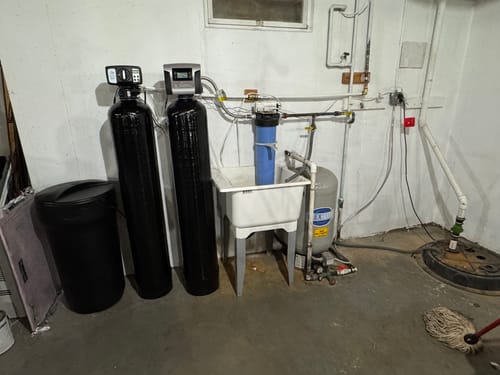
I'm a bit of a data nerd, so I invested in a TDS meter and chlorine test strips to track actual performance over time. The baseline measurements from our municipal supply showed 185 PPM total dissolved solids and 2.1 PPM free chlorine - typical for Denver's water system.
Within 24 hours of installation, chlorine levels at our kitchen faucet measured zero on test strips. The chemical smell that had plagued our house completely disappeared, and the taste difference was immediately noticeable. My wife stopped buying bottled water within the first week.
What impressed me most was the consistency of performance. After six months of operation, I was still getting zero chlorine readings and TDS levels had stabilized at around 165 PPM.
The catalytic carbon was clearly working as designed, breaking down chloramines and other disinfection byproducts that conventional carbon struggles with.
I tested fluoride levels using mail-in testing services at the three-month and twelve-month marks. Our municipal supply typically runs 0.8-1.0 PPM fluoride, and post-filtration levels consistently measured 0.2-0.3 PPM. The bone char media was delivering exactly the reduction performance I'd researched.
Flow rate testing revealed no noticeable pressure drops during normal usage. Even with simultaneous showers and dishwasher operation, fixture pressure remained strong. The 15 GPM rating proved adequate for our household demands without any performance compromises.
One unexpected benefit was the improvement in our water heater efficiency. Without mineral buildup from untreated water, our gas water heater began cycling less frequently. Our utility bills showed a modest decrease in gas consumption - not huge, but a nice bonus.
Coffee and tea taste improved dramatically. As someone who drinks several cups daily, this alone justified the investment for me. The absence of chlorine flavor let the actual beverage flavors come through cleanly.
Daily Living Impact: Beyond Just Better Taste
The most immediate change was in our kitchen habits. We went from avoiding tap water to preferring it over bottled options. My teenage daughter, who'd been skeptical about the whole project, admitted the water "actually tastes normal now." High praise from a teenager.
Shower experiences improved noticeably within the first month. The chlorine that had been drying out our skin was gone, and both my wife and I noticed less irritation after bathing. Our dermatologist had mentioned that chlorinated water could exacerbate skin sensitivity - apparently she was right.
Laundry results were subtly better. Colors seemed to stay brighter longer, and white fabrics didn't develop that grayish tint we'd been fighting. We reduced fabric softener usage because clothes felt naturally softer without the mineral buildup.
Did the system eliminate all our water concerns overnight?
Honestly, no single system could address every possible contaminant, but it tackled our primary issues effectively. The peace of mind knowing we'd addressed chlorine, fluoride, and chloramines was significant.
Guests consistently comment on water quality now - in a positive way. Several neighbors have asked about our system after noticing the difference during visits. Two have since installed similar whole-house filtration systems.
Plant watering became more enjoyable. Our houseplants seemed to respond better to the filtered water, with less leaf browning that we'd attributed to chlorine exposure. Even our dog seemed to drink more water, though that could be coincidental.
Ice cubes from our refrigerator dispenser finally tasted clean. Previously, even ice had carried that chemical flavor from the municipal supply. Now our beverages taste exactly as they should.
Maintenance Reality: What Ownership Actually Involves
The system requires virtually no daily attention, which suits my preference for low-maintenance solutions. The automatic backwash cycles happen every few days, typically during early morning hours when we're not using water actively.
Monthly maintenance involves checking the salt level in the brine tank - wait, that's for water softeners. This system actually requires minimal ongoing attention. I check the control valve display occasionally to ensure normal operation, and that's basically it for routine monitoring.
The catalytic carbon media should last 3-5 years depending on usage and input water quality. At eighteen months, performance remains strong with no signs of capacity reduction. The bone char component may need replacement slightly sooner, around 2-3 years in our application.
What does media replacement actually cost?
I've researched pricing for future replacement, and a complete media change runs about $180-220 including shipping. Considering the system treats all water entering our house, that's reasonable for 3 years of service.
Backwash cycles use approximately 50 gallons per regeneration, occurring every 3-4 days in our household. This adds roughly $8-12 monthly to our water bill - insignificant compared to the bottled water costs we eliminated.
The control valve has been completely reliable. No programming drift, no missed cycles, no electronic glitches. The LCD display remains clear and responsive after eighteen months of basement humidity exposure.
One maintenance surprise was how easy the system is to service. When I had a minor question about backwash frequency, adjusting the programming took less than five minutes. The manual is actually helpful - unusual for water treatment equipment.
Investment Analysis: Calculating Real Value
The system cost $847 delivered, plus about $85 in additional plumbing supplies for installation. Professional installation would have added $200-300, but I managed the DIY approach successfully.
Our previous bottled water expenses averaged $35-40 monthly for drinking water alone. The system paid for itself in about two years just on eliminated bottled water costs. Add the improvement in household water quality, and ROI becomes compelling.
Are there any hidden ongoing costs I didn't anticipate?
Not really. Electricity consumption for the control valve is minimal - maybe $3-4 annually. Salt costs... again, wrong system type. This carbon filtration setup has remarkably low operating expenses.
Comparing to point-of-use solutions we'd considered, the whole-house approach provides better value. Instead of filtering just drinking water, we're treating everything - showers, laundry, appliances, and consumption. The cost per gallon treated is actually quite reasonable.
Property value considerations weren't my primary motivation, but whole-house water treatment systems do add to home appeal. When we had our house appraised for refinancing, the appraiser specifically noted the water treatment installation as a positive feature.
Long-term cost projections look favorable. Over a ten-year ownership period, total costs including media replacement should run about $1,400-1,600. That's roughly $12-14 monthly for comprehensive household water treatment - less than many families spend on bottled water.
The system has also reduced wear on our appliances. Our dishwasher no longer shows mineral spotting, and the coffee maker hasn't required descaling since installation. These aren't huge savings, but they add up over time.
Worth every penny, works well - that simple assessment captures my experience perfectly. Sometimes the most valuable investments are the ones that quietly improve daily life without requiring constant attention or maintenance headaches.