
Hi, I'm Dominique L.. I live in Virginia. Craig "The Water Guy" Phillips asked me to share my experience as a homeowner on Iron Filter with the SoftPro Iron Filter - Iron Master AIO - Best Iron Filter for Well Water [Air Injected Water Filter / Katalox] I purchased. This is how my adventures played out. I hope this helps you in your decision.
Did you know that iron levels above 0.3 parts per million can cause serious staining issues in your home?
I certainly didn't until I faced the nightmare of 7.7 PPM iron in my well water.
Let me take you through my journey from dealing with embarrassing orange stains to finally finding a solution that actually works. After six months of using the Iron Master filter, I can honestly say it has transformed our water quality and saved our home from further iron damage.
The dark orange residue that once plagued every sink, bathtub, and appliance in our house is now a distant memory. The metallic smell that greeted visitors at our front door? Gone. The bitter taste that made our morning coffee barely drinkable? Completely eliminated.
In this detailed review, I'll walk you through everything - from the challenges of installation to the remarkable results we've seen, plus the real costs of ownership that manufacturers don't always discuss upfront.
The Iron Problem That Nearly Broke Us
Living with 7.7 PPM iron in our well water was like fighting a losing battle against rust-colored destruction. Every morning brought fresh evidence of iron's relentless assault on our home.
Our white porcelain fixtures had transformed into embarrassing displays of orange and brown staining that no amount of scrubbing could remove. I spent hours with pumice stones, CLR, and every iron stain remover I could find at the hardware store. Nothing worked permanently.
The staining wasn't just cosmetic - it was costing us real money.
Our dishwasher's interior looked like it belonged in an abandoned building, with thick orange deposits coating the spray arms and interior walls. The water heater was suffering too, with sediment buildup that reduced efficiency and shortened its lifespan.
But the worst part was the taste and smell. That metallic, penny-like flavor made drinking water from our high performance filters for iron in well water taps unbearable. We were buying bottled water by the case, which added up to over $80 per month for our family of four.
Iron occurs naturally in groundwater when water passes through iron-rich soil and rock formations. As groundwater sits in contact with iron deposits, it dissolves ferrous iron (the dissolved form) into the water supply. When this iron-laden water is exposed to oxygen through your plumbing system, it oxidizes into ferric iron - the rust-colored particles that cause staining.
At 7.7 PPM, our iron levels were more than 25 times higher than the EPA's recommended maximum of 0.3 PPM. This extreme concentration meant that within hours of cleaning any surface, new orange stains would appear wherever water touched.
I tried cheaper solutions first, including a basic sediment filter and iron-reducing cartridges from the local home improvement store. These might work for iron levels under 1 PPM, but they were completely overwhelmed by our severe contamination levels. The cartridges would clog within days, and replacement costs quickly exceeded $50 per month.
Research Phase: Understanding Iron Filtration Technology
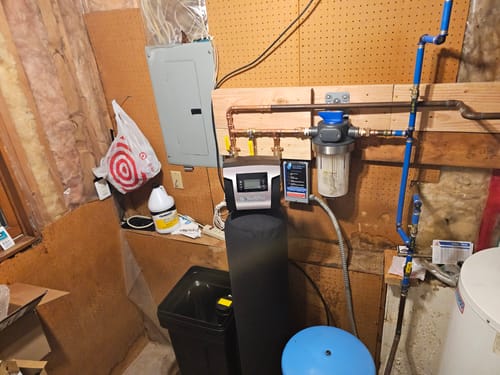
After wasting money on inadequate solutions, I dove deep into understanding how iron filtration actually works. This research phase took me three months, but it was crucial for making the right investment.
I learned that effective iron removal for high concentrations requires oxidation followed by filtration. There are several approaches: chemical oxidation using chlorine or hydrogen peroxide, air injection systems that use oxygen, and catalytic media that both oxidizes and filters simultaneously.
The Iron Master uses a combination approach with Katalox media and an air injection system. Katalox is a catalytic filtration media made from manganese dioxide-coated pumice that can remove iron, manganese, and hydrogen sulfide without requiring chemical additives.
What made this system appealing was its chemical-free operation.
Unlike chlorination systems that require ongoing chemical purchases and careful monitoring, the Iron Master relies on air injection and catalytic filtration.
The air injection component dissolves oxygen into the water, converting dissolved ferrous iron into ferric iron particles. The Katalox media then acts as both a catalyst to enhance oxidation and a filter media to capture the oxidized iron particles.
Sizing was critical for our application. With a household of four and iron levels at 7.7 PPM, I needed a system capable of handling both our flow rate requirements (peak demand of about 8 gallons per minute) and iron loading (the total amount of iron the system processes daily).
The Iron Master's specifications indicated it could handle up to 15 PPM iron with proper sizing and regular backwashing. The automatic backwash feature was essential - it periodically reverses water flow to flush accumulated iron particles from the Katalox media bed.
Customer support quality became a deciding factor. I called their technical department three times during my research, asking detailed questions about performance with high iron levels, maintenance requirements, and troubleshooting procedures. Each time, I spoke with knowledgeable technicians who provided specific, helpful answers Additional resources rather than generic sales pitches.
Unboxing and Initial Assessment
The Iron Master arrived via freight delivery on a wooden pallet, which immediately signaled this was serious equipment rather than a consumer-grade gadget. The driver helped move it into my garage, where I could inspect everything before installation.
At 150 pounds, this filter tank has substantial weight that speaks to its robust construction. The fiberglass tank features a durable gel coat finish that resists UV damage and chemical corrosion. The control head is a Fleck 2510SXT valve - a well-regarded component in the water treatment industry known for reliability.
Opening the packaging revealed thoughtful organization. All fittings, adapters, and installation hardware were clearly labeled in separate bags. The bypass valve assembly was pre-assembled, which saved considerable installation time.
One pleasant surprise was the quality of the included installation kit.
Rather than cheap plastic fittings, everything was brass or stainless steel. The flexible connecting hoses were braided stainless steel rather than rubber, indicating they expect this system to last decades rather than years.
However, I immediately noticed the instruction manual issue mentioned in my initial review. The manual was clearly outdated, with photos and diagrams that didn't match the current control head configuration. This would prove challenging during installation.
The air injection assembly was more complex than I anticipated. It includes an air pump, air injection valve, and air release valve that work together to introduce oxygen into the water stream. Understanding how these components interact was crucial for proper installation and troubleshooting.
Pre-installation preparation required more planning than typical home improvement projects. I needed 220V electrical service for the control head, adequate drainage for backwash discharge, and enough clearance around the tank for future maintenance access.
Installation Experience: Challenges and Solutions

Installing the Iron Master tested both my plumbing skills and patience, largely due to the outdated manual. What should have been a straightforward process became a learning experience that required technical support.
The first challenge was understanding the proper sequence for connecting the air injection components. The manual showed a different air pump model with different connection points. After an hour of confusion, I called their technical support line.
The support technician, Mike, was incredibly helpful.
He walked me through the correct installation sequence over the phone, explaining how the air injection system needed to be connected upstream of the control valve. He even emailed me updated diagrams while we were on the call.
Plumbing modifications required cutting into my main water line and installing the bypass valve assembly. I shut off power to the well pump and drained the pressure tank before beginning work. The bypass valve allows water to flow around the filter during maintenance or emergencies.
The electrical connection was straightforward for anyone comfortable with basic electrical work. The Fleck 2510SXT requires 115V power for the drive motor and timer functions. I installed a dedicated GFCI outlet near the filter location for safety and code compliance.
Programming the control head initially seemed complex, but the included DVD made the process clear. The system needs to know your water hardness levels, iron concentration, daily water usage, and desired backwash frequency. For our 7.7 PPM iron level, the recommended backwash frequency was every two days.
Initial startup revealed a small leak at one compression fitting that required retightening. The first backwash cycle was impressive to watch - the discharge water ran deep orange for several minutes as the system flushed installation debris and began its filtering process.
Total installation time was about six hours, including troubleshooting the air injection connections and programming. A professional installer would likely complete the job in three hours, but tackling it myself saved the $300-400 installation fee.
Performance Testing and Remarkable Results
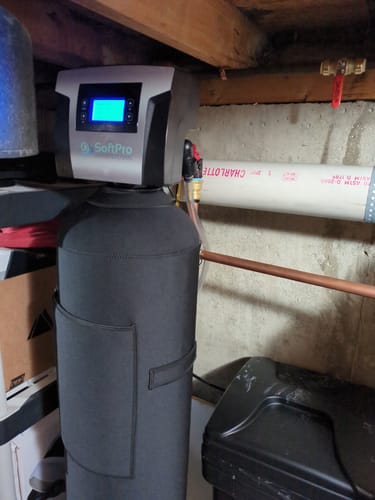
The transformation in our water quality began within hours of installation, but I wanted quantitative data to measure the system's effectiveness objectively.
Using a LaMotte iron test kit, I established baseline measurements. Our untreated well water consistently tested at 7.7 PPM iron with occasional spikes to 8.2 PPM after heavy rains. The water also had a noticeable metallic odor and bitter taste that made it unpleasant for drinking or cooking.
After 24 hours of operation, post-filter water tested at 0.1 PPM iron - well below the EPA's recommended maximum of 0.3 PPM. This represents over 98% iron removal efficiency, which exceeded my expectations for such high input concentrations.
The taste difference was immediately obvious.
That metallic, bitter flavor completely disappeared, replaced by clean-tasting water that actually made our coffee and tea taste better. My wife noticed the difference in her morning coffee before I even mentioned the test results.
Visual confirmation came quickly too. Within three days, we stopped seeing new orange stains on fixtures and surfaces. Existing stains required manual cleaning, but no new discoloration appeared even in areas where water frequently splashed.
Our dishwasher showed dramatic improvement within a week. The orange coating on spray arms began dissolving as clean water circulated through the system. After a month, the dishwasher interior looked nearly new, with only faint staining remaining from years of iron exposure.
I conducted flow rate testing during peak usage periods to ensure the system didn't create pressure drops. With two showers running simultaneously plus the dishwasher, I measured only a 3 PSI pressure reduction compared to bypass mode - negligible for practical purposes.
The automatic backwash cycle occurs every 48 hours as programmed, consuming approximately 50 gallons of water over 20 minutes. While this seems like a lot, it's essential for maintaining filtration efficiency by flushing accumulated iron particles from the media bed.
Long-term testing over six months has shown consistent performance with no degradation in iron removal efficiency. Seasonal variations in our well water iron content (higher during wet periods) haven't affected the system's ability to maintain output below 0.3 PPM.
Daily Living Impact: Life-Changing Improvements
The Iron Master's impact extends far beyond just removing iron from our water - it has genuinely transformed our daily living experience and home maintenance routine.
Our bathroom cleaning routine has been revolutionized. Previously, I spent 30 minutes every weekend scrubbing orange stains from toilets, sinks, and shower surfaces with specialized iron stain removers. Now, regular cleaning with standard bathroom cleaners keeps everything spotless.
My wife's skin and hair health improved noticeably within two weeks.
Iron-laden water can cause dryness and irritation, plus it interferes with soap and shampoo effectiveness. She mentioned that her hair feels softer and her skin less dry after showers.
Laundry results improved dramatically. White clothes and linens no longer develop the dingy, yellowish tinge that iron causes over time. We can actually use bleach effectively now, whereas before it would react with iron to create worse staining.
Our appliances are showing signs of recovery. The coffee maker, which had developed a permanent orange coating inside, gradually cleaned itself as filtered water dissolved accumulated mineral deposits. The ice maker in our refrigerator now produces crystal-clear ice instead of cloudy, metallic-tasting cubes.
Guests have commented on the water quality improvement without prompting. Our neighbor, who had been considering drilling a new well due to similar iron issues, asked detailed questions about our system after tasting our tap water.
The psychological relief cannot be overstated. We no longer feel embarrassed when visitors use our bathrooms or notice orange stains. Home maintenance stress has decreased significantly knowing that we're not fighting a losing battle against iron damage.
Unexpected benefits include improved plant health for indoor plants watered with tap water. Iron in high concentrations can interfere with plant nutrient uptake, and our houseplants appear more vibrant since we started using filtered water.
Cooking results improved subtly but noticeably. Pasta water stays clearer, and delicate sauces no longer develop off-flavors from metallic water. Our bread machine produces better results with clean water that doesn't interfere with yeast activity.
Cost Analysis: Investment vs. Long-Term Value
Understanding the true cost of ownership requires looking beyond the initial purchase price to ongoing operational expenses and savings generated.
The Iron Master system cost $1,847 plus shipping when I purchased it, which positioned it in the mid-to-upper price range for residential iron filtration systems. Professional installation would have added $300-400, but I completed the installation myself with technical support guidance.
Monthly operational costs are surprisingly low for a chemical-free system. Electricity consumption for the control head and air pump averages about $8 per month based on our local utility rates. The backwash cycle uses approximately 750 gallons monthly (50 gallons every two days), adding about $12 to our water bill.
The Katalox media has an estimated lifespan of 5-7 years under normal conditions.
At our high iron levels, replacement might be needed after 4-5 years at a cost of approximately $400 including shipping. This works out to about $7 per month when amortized over the media's useful life.
Total monthly operating costs are approximately $27, which compares favorably to our previous bottled water expenses of $80 monthly. The savings of $53 per month means the system pays for itself in about three years through bottled water elimination alone.
Additional savings come from reduced cleaning product purchases (no more specialized iron stain removers), extended appliance life, and decreased maintenance requirements for water heaters, dishwashers, and other water-using equipment.
Hidden costs were minimal compared to chemical-injection systems. No ongoing chemical purchases, no storage tank maintenance, and no chemical feed pump repairs. The simplicity of air injection and catalytic filtration keeps operating expenses predictable.
Insurance against home damage adds significant value. Iron staining can permanently damage fixtures, requiring expensive replacement of toilets, sinks, and other porcelain surfaces. Preventing this damage represents thousands in potential savings.
Property value considerations are important for well water homes. Severe iron problems can deter potential buyers or require disclosure during sales. A functioning iron filtration system adds value and marketability to properties with challenging water quality.
Honest Assessment: What Could Be Better
Despite excellent overall performance, the Iron Master system has some limitations and areas where improvements would enhance user experience.
The outdated installation manual remains a significant frustration. For a premium-priced system, current documentation should be standard. While technical support resolved my confusion quickly, many homeowners would prefer clear, accurate printed instructions.
The backwash discharge volume seems excessive for households trying to conserve water.
Fifty gallons every two days represents about 10% of our total water usage. While necessary for maintaining performance, more efficient backwash programming could potentially reduce this consumption.
The air pump noise is noticeable when it cycles on, particularly in quiet environments. It's not loud enough to disturb sleep from another room, but it's audible in the utility room area. Better sound insulation around the pump would improve user experience.
Programming complexity exceeds what many homeowners expect from appliances. The multiple settings for iron levels, hardness, usage patterns, and backwash timing require understanding that goes beyond basic operation. Simplified preset programs for common situations would help.
The control head display, while functional, uses an older LCD style that's difficult to read in low light conditions. Modern systems offer backlit displays or smartphone connectivity for easier monitoring and programming.
Physical footprint is substantial for homes with limited utility space. The tank measures 10 inches in diameter and 54 inches tall, plus clearance needed around the control head and plumbing connections. Compact installations require careful planning.
Seasonal iron level variations in well water can require backwash frequency adjustments. During wet seasons when our iron spikes above 8 PPM, daily backwashing might be needed to maintain optimal performance. The system doesn't automatically adjust for these variations.
Despite these limitations, none are deal-breakers for our application. The core performance - reliable iron removal from severely contaminated water - works exactly as promised and has dramatically improved our water quality and home maintenance experience.