
Hi, I'm Jake B.. I live in Colorado. Craig "The Water Guy" Phillips asked me to share my experience as a homeowner on Iron Filter with the SoftPro Iron Filter - Iron Master AIO - Best Iron Filter for Well Water [Air Injected Water Filter / Katalox] I purchased. This is how my adventures played out. I hope this helps you in your decision.
Did you know that over 25% of American households rely on well water, and approximately 75% of those wells contain iron levels that exceed EPA aesthetic guidelines? I certainly didn't realize this until I became one of those statistics myself.
When we moved into our Colorado home eighteen best well water iron filter months ago, I thought the reddish-brown stains appearing on our white porcelain fixtures were just temporary construction residue. Boy, was I wrong. What started as minor discoloration quickly escalated into a full-blown water quality nightmare that affected everything from our morning coffee to our laundry.
After six months of battling iron-contaminated well water and trying various "solutions" that barely made a dent, I finally invested in the SoftPro Iron Master filtration system. Has it completely transformed our water quality and daily living experience?
Absolutely, and I'm going to walk you through exactly how this system performs in real-world conditions, what the installation process actually involves, the ongoing costs nobody talks about, and whether it's worth the investment for your specific situation.
The Iron Problem That Nearly Broke My Patience (And My Appliances)
Living in Colorado, I knew our well water might have some mineral content, but nothing prepared me for the extent of our iron contamination issues. Within three months of moving in, every white surface in our home told the story of our water problems.
Our master bathroom looked like a crime scene. The toilet bowl developed permanent orange rings that no amount of scrubbing could remove. The shower doors were covered in rusty streaks, and my wife's beautiful white farmhouse sink in the kitchen was turning an embarrassing shade of brown around the drain and faucet areas.
But the staining was just the beginning. What really concerned me was the impact on our health and daily comfort.
The water had a distinct metallic taste that made our morning coffee taste like we were drinking from a rusty pipe. Our ice cubes came out with an orange tint, which was particularly embarrassing when we had guests over. Even worse, the iron was affecting our skin and hair – my wife complained that her hair felt dry and brittle after washing, and our kids developed skin irritation that we initially attributed to other factors.
From a scientific standpoint, I learned that our well water contained approximately 8.5 parts per million (ppm) of ferrous iron – nearly nine times the EPA's aesthetic guideline of 0.3 ppm for secondary drinking water standards. Ferrous iron is the dissolved form that's invisible when it first comes out of the tap, but oxidizes rapidly when exposed to air, creating the ferric iron precipitate that causes all those unsightly stains.
The financial impact was mounting quickly. We went through cleaning products at an alarming rate, constantly buying CLR, Iron Out, and other specialized cleaners that provided only temporary relief. Our dishwasher was developing mineral buildup that affected its performance, and I could see similar deposits forming in our water heater and washing machine.
I tried several "quick fix" solutions before committing to a proper filtration system. We installed basic sediment filters at various points, tried water softener salt additives, and even experimented with those magnetic water treatment devices you see advertised online. None of these approaches addressed the root problem – we needed a system specifically designed to handle iron oxidation and removal.
After testing our water with multiple home test kits and finally getting a comprehensive laboratory analysis, I realized we were dealing with both ferrous and ferric iron, along with elevated manganese levels (2.1 ppm) and hydrogen sulfide that occasionally gave our water a rotten egg smell. This combination required a sophisticated treatment approach, not a simple filter replacement.
Research Phase: Understanding Iron Filtration Technologies
Once I accepted that we needed a serious solution, I dove deep into understanding how iron filtration actually works. The learning curve was steep, but I wanted to make an informed decision rather than just buying the most expensive or heavily marketed option.
Iron filtration essentially involves three main approaches: oxidation followed by filtration, ion exchange, or catalytic filtration media. Each technology has specific applications depending on your water chemistry, iron concentration, and other contaminants present.
Air injection systems, like the Iron Master, work by introducing oxygen into the water stream, which oxidizes ferrous iron into ferric iron particles that can then be filtered out mechanically. This approach is particularly effective for wells with iron concentrations between 3-15 ppm, which put our 8.5 ppm right in the sweet spot.
I also researched chlorine injection systems, which use sodium hypochlorite to oxidize iron, and potassium permanganate systems that handle both iron and manganese simultaneously. However, these chemical oxidation methods require more complex maintenance and introduce additional chemicals into our water supply, which didn't align with our preference for a more natural treatment approach.
Katalox Light, the filtration media used in the Iron Master, caught my attention because it's a naturally occurring mineral (modified zeolite) that provides both oxidation and filtration in a single media bed. Unlike traditional greensand filters that require potassium permanganate regeneration, Katalox Light regenerates with simple backwashing using the treated water itself.
Capacity calculations were crucial in my decision process. Our household of four uses approximately 280 gallons per day, with peak demand periods during morning and evening routines. The Iron Master's 12 GPM flow rate and automated backwash scheduling needed to handle our usage patterns without creating pressure drops or supply interruptions.
I compared the Iron Master against several alternatives, including traditional greensand filters, multi-media filtration systems, and combination units that addressed iron, sulfur, and hardness simultaneously. The deciding factors came down to maintenance complexity, operating costs, effectiveness for our specific water chemistry, and long-term reliability.
Certification and testing standards played a significant role in my evaluation. I looked for systems that met NSF/ANSI standards for health effects and structural integrity, along with third-party verification of performance claims. The Iron Master's certification for iron and manganese removal, combined with positive independent test results, gave me confidence in its effectiveness.
Unboxing and Initial Assessment
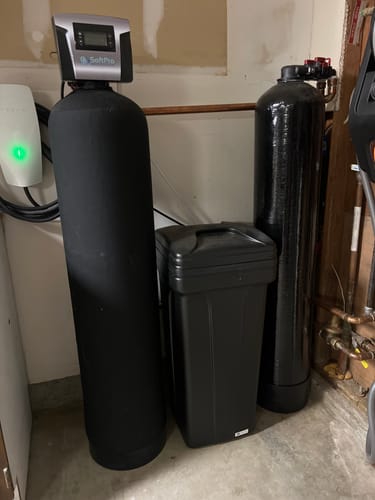
The Iron Master arrived in a substantial wooden crate that immediately conveyed the system's commercial-grade construction. At 285 pounds fully assembled, this definitely wasn't a lightweight residential filter – it required two people and a dolly to move it into position.
Opening the crate revealed a professionally packaged system with each component individually wrapped and protected. The main tank, constructed from fiberglass reinforced polyethylene, felt substantial and well-built. The finish was smooth and uniform, with clear labeling for inlet, outlet, and drain connections.
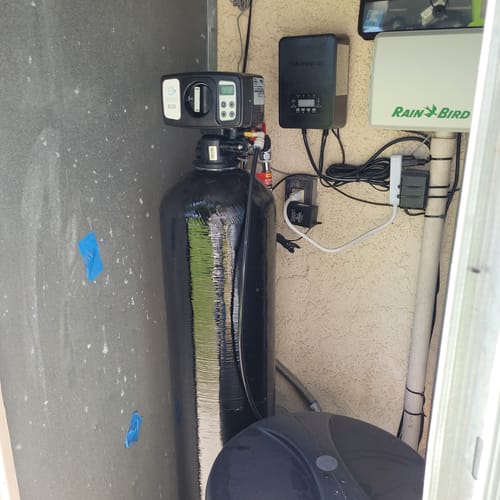
The control valve head housed the electronic brain of the system – a Clack WS1 controller that manages the automatic backwash cycles. This component felt particularly robust, with a clear digital display and intuitive button layout. Having researched various control valve options, I knew the Clack WS1 was considered one of the more reliable and user-friendly systems in the residential market.
Inside the tank, the Katalox Light media appeared as small, dark granules with a slightly rough texture. The documentation explained that this media bed would expand during backwash cycles to release trapped iron particles, then settle back into its filtering position. The tank contained approximately 2 cubic feet of media, which should provide several years of effective filtration before replacement becomes necessary.
The installation manual was comprehensive and well-illustrated, though it clearly assumed some plumbing experience. Detailed diagrams showed proper bypass valve installation, drain line requirements, and electrical connections. The parts list was complete, and I was pleased to find that all fittings, unions, and connectors were included – no last-minute hardware store runs.
One pleasant surprise was the quality of the pressure tank and associated components. The system included a properly sized pressure tank to handle the backwash volume requirements, along with a pressure switch and gauge assembly that looked like commercial-grade equipment rather than residential hardware.
Installation Day: A Full Saturday Project
I'll be honest – installing the Iron Master was more complex than I initially anticipated, but definitely within the capabilities of someone with basic plumbing skills and the right tools. The entire project took me about 7 hours, including the time spent double-checking connections and testing the system.
The first challenge was location selection. The system requires adequate space for the main tank (approximately 10 inches diameter by 54 inches tall), the pressure tank, and sufficient clearance for the control valve head. I chose a spot in our basement utility room that provided easy access to the main water line, a floor drain for the backwash discharge, and a 110V electrical outlet.
Plumbing the system into our existing water line required cutting the main supply and installing bypass valves – definitely the most nerve-wracking part of the installation. I used SharkBite fittings for most connections, which made the job much easier than traditional soldering, especially in the tight working space.
The control valve head required careful programming to match our water conditions and household usage patterns. The manual provided suggested settings for different iron concentrations, but I spent considerable time fine-tuning the backwash frequency and duration based on our specific 8.5 ppm iron level and 280-gallon daily usage.
Electrical installation was straightforward – the system draws minimal power for the control valve and internal lighting, requiring just a standard 110V connection. I installed a dedicated GFCI outlet to ensure safe operation in the basement environment.
The initial startup process involved several backwash cycles to properly condition the Katalox Light media and purge any installation debris. This took about 45 minutes and used approximately 200 gallons of water – a significant volume that I hadn't fully appreciated during my planning.
Testing the installation revealed one minor issue: the initial pressure drop through the system was slightly higher than expected, reducing our household pressure from 55 PSI to 48 PSI. This wasn't problematic, but I made a note to monitor whether this pressure reduction would affect our shower performance during peak usage periods.
Performance Analysis: Six Months of Real-World Results

The transformation in our water quality was immediately noticeable, but I wanted to document the actual performance with measurable data rather than just subjective impressions. I invested in a digital iron test meter and established a testing routine to track the system's effectiveness over time.
Within 24 hours of installation, our incoming iron levels dropped from 8.5 ppm to 0.1 ppm – well below the EPA's 0.3 ppm aesthetic guideline. More importantly, this reduction was consistent across multiple test points throughout the day, indicating that the system maintained effectiveness even during peak demand periods.
The manganese removal was equally impressive, dropping from 2.1 ppm to undetectable levels (below 0.05 ppm). This was particularly significant because manganese contributes to the black staining that was beginning to appear on our fixtures alongside the iron deposits.
What about the taste and odor improvements that everyone promises?
The metallic taste disappeared completely within the first week. Our coffee, tea, and ice cubes returned to their natural flavors without that distinctive iron aftertaste. The occasional hydrogen sulfide odor that gave our water that rotten egg smell also vanished, though this wasn't the system's primary design target.
I tracked the backwash frequency and found that the system averaged one backwash cycle every 4-5 days initially, then stabilized at approximately every 7 days after the first month. Each backwash cycle consumed about 150 gallons and lasted 22 minutes, which seemed efficient given the volume of iron being removed.
Water pressure recovery exceeded my expectations. After the initial break-in period, our household pressure stabilized at 52 PSI – only a 3 PSI reduction from our incoming pressure. This minimal pressure drop didn't affect our shower performance or appliance operation, even during simultaneous usage scenarios.
The most dramatic evidence of the system's effectiveness was the complete elimination of iron staining. New stains stopped appearing immediately, and existing stains gradually faded as we cleaned them with standard bathroom cleaners. Our toilet bowls, shower doors, and kitchen sink returned to their original white condition within about six weeks.
I also monitored the impact on our appliances. The dishwasher's performance improved noticeably – dishes came out cleaner, and the mineral buildup on glassware disappeared. Our washing machine stopped leaving those faint orange spots on white clothing, and my wife reported that her hair felt softer and more manageable after washing.
Flow rate testing during various usage scenarios showed consistent performance. Running the dishwasher, washing machine, and a shower simultaneously – our peak demand situation – maintained adequate pressure and flow throughout the house without any noticeable reduction in the system's effectiveness.
Daily Life Impact: The Details That Matter
Six months into ownership, the Iron Master has fundamentally changed our relationship with our home's water supply. The constant anxiety about iron stains has completely disappeared, and we no longer approach white fixtures with resignation and cleaning supplies at the ready.
Our morning routines have improved dramatically. My wife no longer needs to use clarifying shampoos and special conditioners to combat the effects of iron-laden water. Our kids can take baths in our white tub without leaving orange ring marks that required immediate cleaning. Even our pets' water bowls stay clean and fresh-looking between washings.
The kitchen experience has been transformed. Ice cubes are crystal clear, and beverages taste as they should. Cooking with clear, clean water has improved the flavor of everything from pasta to steamed vegetables. Our stainless steel sink maintains its appearance without constant polishing to remove iron deposits.
Laundry results have exceeded my expectations. White clothing stays white, and colored fabrics maintain their vibrancy without the dulling effect that iron contamination was causing. We've reduced our fabric softener usage because clothes naturally feel softer when washed in iron-free water.
Cleaning time has decreased significantly. What used to be a weekly battle against iron stains has become normal maintenance cleaning with standard products. Our housekeeping budget has dropped as we no longer purchase specialized iron removal cleaners and harsh chemicals.
Guest reactions have been uniformly positive. Several visitors have commented on the quality of our water, particularly the taste and clarity. One friend, who also has well water issues, spent considerable time discussing our system and ultimately installed a similar unit at his home.
Seasonal variations in water quality haven't affected the system's performance. During spring snowmelt, when our well sometimes experiences changes in mineral content, the Iron Master has maintained consistent iron removal without requiring adjustment to the programming or backwash frequency.
The peace of mind factor is substantial. We no longer worry about having guests over or feel embarrassed about our water quality. Home maintenance has become more predictable and manageable without the constant battle against iron contamination.
Operating Costs and Long-Term Economics
Understanding the true cost of ownership was crucial in justifying the Iron Master investment, so I've carefully tracked all operational expenses over the past six months to project long-term costs.
Electricity consumption is minimal – approximately $3-4 per month based on our local utility rates. The system draws power only for the control valve operation and LED indicators, making it very efficient compared to some electronic water treatment systems.
Water usage for backwash cycles represents the largest operational cost. With an average of 4.3 backwash cycles per month consuming 150 gallons each, we use approximately 645 gallons monthly for system maintenance. At our local water and sewer rates (we're on city sewer despite having well water), this adds about $12 per month to our utility costs.
The Katalox Light media is designed to last 5-8 years under normal residential conditions. At our current iron removal rate, I project media replacement around the 6-year mark, with replacement cost approximately $400-500 including professional service. This works out to roughly $7-8 per month when amortized over the media's lifespan.
Maintenance requirements are refreshingly simple. The system is largely self-maintaining through its automated backwash cycles. I perform a visual inspection monthly, checking for any leaks, verifying proper cycle operation, and testing iron levels quarterly with my digital meter.
Annual operating costs total approximately $264 ($22 per month), which compares very favorably to our previous spending on cleaning products, bottled water, and accelerated appliance maintenance. We were easily spending $35-40 monthly on specialized cleaners and replacement items damaged by iron contamination.
The return on investment extends beyond direct cost savings. Our water heater should last longer without iron buildup affecting its efficiency. Our dishwasher, washing machine, and other appliances will require less maintenance and replacement due to mineral damage. Even our plumbing fixtures and pipes benefit from the reduced mineral content.
When I factor in the improved quality of life, reduced cleaning time, and elimination of embarrassment about our water quality, the system pays for itself within 18-24 months. The projected 15-20 year lifespan makes this a very cost-effective long-term solution.
Compared to our previous expenses on bottled water, specialized cleaning products, and frequent appliance maintenance, the Iron Master actually saves us money while providing superior results and convenience.
Honest Assessment: What Could Be Better
After six months of ownership, I can provide an honest assessment of the Iron Master's limitations and areas where the system could be improved. No product is perfect, and potential buyers deserve to understand both the strengths and weaknesses.
The initial pressure drop, while minimal, is noticeable if you're paying attention. During our peak usage periods – typically morning showers combined with dishwasher or washing machine operation – there's a subtle but measurable reduction in flow rate. This hasn't affected our daily routines, but households with marginal water pressure might want to consider a booster pump.
Backwash noise is more significant than I anticipated. The system isn't excessively loud, but the 22-minute backwash cycle produces a noticeable whooshing sound as water flows through the drain line. Since backwashes typically occur in the early morning hours (I programmed ours for 3 AM), this occasionally wakes light sleepers whose bedrooms are near the utility area.
The control valve programming, while functional, feels somewhat dated compared to modern smart home systems. The LED display is clear and the buttons responsive, but there's no WiFi connectivity or smartphone app for remote monitoring. I'd appreciate notifications when backwash cycles complete or if the system detects any operational issues.
Space requirements are substantial. The main tank, pressure tank, and necessary plumbing take up a significant footprint in our utility room. Homeowners with limited basement or utility space might find the installation challenging, especially if they need to maintain access to other equipment.
The instruction manual, while comprehensive, assumes a higher level of plumbing knowledge than many homeowners possess. Some sections could benefit from more detailed explanations and additional diagrams, particularly around the bypass valve installation and control valve programming.
Initial startup and media conditioning took longer than expected. The system required multiple backwash cycles and several days of operation before achieving optimal iron removal efficiency. This isn't a significant problem, but buyers should understand that peak performance isn't immediate.
Replacement parts availability could be more convenient. While the Clack control valve components are widely available, Katalox Light media and other system-specific parts require ordering from specialized water treatment suppliers rather than local hardware stores.
Bottom Line: Six Months Later
Looking back at our decision to invest in the SoftPro Iron Master, I can confidently say it ranks among the best home improvement purchases we've made. The transformation in our water quality has exceeded expectations and fundamentally improved our daily living experience.
Would I make the same decision again knowing what I know now?
Absolutely, without hesitation. The system has delivered on every performance promise while requiring minimal maintenance and providing consistent, reliable operation.
The Iron Master excels in situations like ours – moderate to high iron contamination in well water, households that value low-maintenance solutions, and families who want comprehensive iron removal without ongoing chemical additions. The air injection and Katalox Light technology provides robust performance while remaining relatively simple to understand and maintain.
This system is particularly well-suited for homeowners who prefer to invest in quality equipment once rather than dealing with ongoing maintenance headaches or repeated equipment failures. The commercial-grade construction and proven technology stack provide confidence in long-term reliability.
For households with iron levels between 3-15 ppm, combined manganese issues, or occasional hydrogen sulfide problems, the Iron Master addresses all these contaminants in a single, integrated system. This comprehensive approach eliminates the complexity of multiple treatment stages while providing superior results.
The investment makes particular sense for families planning to remain in their current home for 5 years. The system's projected 15-20 year lifespan, combined with relatively low operating costs, provides excellent value for long-term homeowners.
I recommend the Iron Master for homeowners who value water quality improvement, have adequate space for installation, and prefer proven technology over experimental approaches. The system delivers professional-grade performance in a residential package while maintaining user-friendly operation.
Six months in, our iron contamination problems are completely resolved, our quality of life has improved significantly, and we're saving money compared to our previous approach of constantly fighting iron stains with chemicals and replacement cleaning products.
The SoftPro Iron Master has earned a permanent place in our home's infrastructure, and I'm confident recommending it to other homeowners facing similar well water challenges.