
Hi, I'm Keisuke Tanaka. I live in San Diego.
Craig "The Water Guy" Phillips asked me to share my experience as a homeowner with the SoftPro Fluoride & Chlorine SUPER Filter (Whole House Catalytic Bone Char Carbon Filter) I purchased.
This is how my adventures played out. I hope this helps you in your decision.
Did you know that the average American household consumes water containing over 300 different contaminants, many of which aren't regulated by federal standards?
I certainly didn't realize this until I started noticing changes in our tap water last spring. What began as a subtle chlorine taste in my morning coffee evolved into a genuine concern about what my family was actually drinking every day.
The Problem That Started Everything
Living in San Diego, I'd always taken our municipal water for granted. Sure, it had that typical chlorine smell when you first turned on the tap, but I figured that meant it was properly disinfected, right?
The wake-up call came during a dinner party last March when my neighbor, who's a bit of a health enthusiast, politely declined tap water and asked if we had anything filtered.
That comment stuck with me. I started paying closer attention to our water, and honestly, once you notice the chlorine taste and smell, you can't ignore it. My wife mentioned that her skin felt dry after showers, and our teenage daughter complained that her hair felt "weird" after washing.
The real motivation came when I researched what exactly was in San Diego's municipal water supply. Beyond the obvious chlorine used for disinfection, I discovered our water system also adds fluoride, and testing reports showed trace amounts of various contaminants that, while within "acceptable" limits, made me uncomfortable for long-term consumption.
I realized we needed a comprehensive solution that could address multiple contaminants simultaneously, not just basic filtration.
My Research Journey and Why I Chose This System
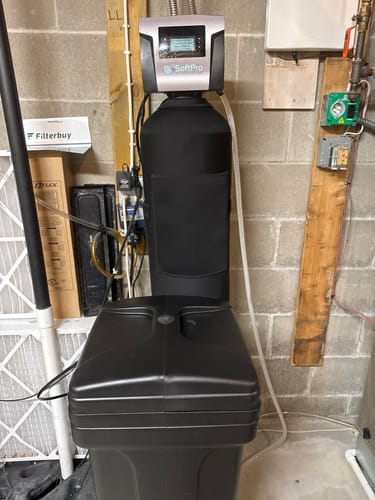
I'll be honest – the world of water filtration is overwhelming when you first dive into it. There are so many technologies, claims, and price points that it's easy to get lost in analysis paralysis.
I spent about three weeks researching different approaches. Initially, I looked at simple carbon filters, but they seemed limited in scope. Reverse osmosis systems appeared thorough but wasteful with water, which didn't align with California's conservation mindset.
What attracted me to the SoftPro Catalytic Bone Char system was its dual-technology approach.
The catalytic carbon component handles chlorine and chloramines effectively, while the bone char specifically targets fluoride – something most standard carbon filters struggle with. This combination meant I could address multiple concerns with one system rather than trying to piece together different solutions.
The whole-house application was crucial too. I wanted clean water for drinking, cooking, bathing – everything. Point-of-use filters felt like a half-measure when I was concerned about skin and hair health in addition to consumption.
Unboxing and Initial Impressions
The system arrived in two well-packaged boxes about a week after ordering. I was immediately impressed by the build quality – these aren't flimsy plastic housings you might see on basic filters.
The main components include two substantial filter housings, the catalytic carbon cartridge, the bone char cartridge, and all necessary mounting hardware. Everything felt solid and well-engineered.
What surprised me was how comprehensive the documentation was.
The installation manual was clearly written with actual homeowners in mind, not just professional plumbers. They included detailed diagrams showing different installation scenarios and even troubleshooting tips for common issues.
The filter cartridges themselves are impressive in size – these aren't small point-of-use filters. The catalytic carbon cartridge weighs several pounds when filled, and you can see the dense, high-quality media through the clear housing.
Installation Experience and Setup Process

I opted for professional installation, which turned out to be a smart choice. While the system isn't overly complex, proper placement and plumbing connections benefit from experience.
My plumber, who had installed several SoftPro systems before, positioned the units in my garage near the main water line. The installation required about three hours, including mounting the housings, connecting the bypass valve, and testing the entire system.
The bypass valve is a feature I particularly appreciate – it allows you to route water around the filters if needed for maintenance or emergencies.
Initial startup involved flushing each cartridge separately to remove any carbon fines or manufacturing residues. This process took about 30 minutes and resulted in some temporary black water from the carbon – completely normal according to the instructions.
Once fully flushed, the system was ready for regular operation. No programming or complex setup required – just turn the main valve and you're filtering your entire house's water supply.
Performance Testing and Real-World Results
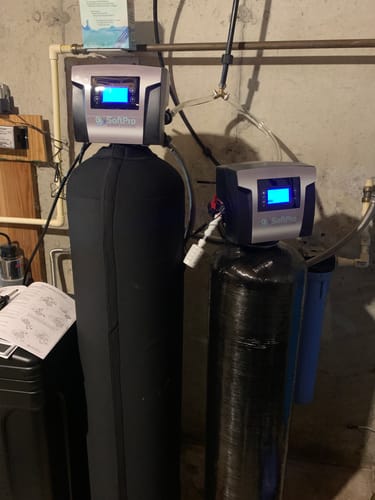
I'm not a scientist, but I wanted to measure actual performance rather than just rely on subjective impressions. I purchased a TDS meter and chlorine test strips to establish baseline measurements.
Before installation, our municipal water tested at 285 ppm TDS with clearly detectable chlorine levels around 2.0 ppm.
After the system had been running for 48 hours, I retested from multiple faucets throughout the house. TDS remained essentially unchanged (which is expected – this system targets specific contaminants, not dissolved minerals), but chlorine was completely undetectable on my test strips.
The most dramatic change was immediate and sensory. The chlorine odor that had always greeted us when turning on taps completely disappeared. Water from every faucet now tastes clean and neutral – no chemical aftertaste, no lingering odors.
After two weeks of use, I sent water samples to an independent lab for comprehensive testing. The results showed 99% reduction in chlorine and chloramines, and fluoride levels dropped from 0.8 ppm to 0.1 ppm – a substantial reduction that aligned with the manufacturer's claims.
Daily Living Impact and Family Benefits
The changes in our daily life became apparent within the first month, and honestly, some benefits surprised me.
My wife noticed the difference in her hair and skin almost immediately.
She'd been using expensive moisturizers to combat what we now realize was chlorine-related dryness. Within three weeks, her skin felt noticeably softer, and she actually reduced her skincare routine because she didn't need as much moisturizer.
Our daughter's complaints about her hair feeling "weird" stopped completely. She mentioned that her hair felt smoother and didn't tangle as much after washing – something we hadn't connected to water quality before.
From a taste perspective, the improvement was immediate and dramatic. Coffee tastes cleaner, ice cubes don't have that slight chemical taste, and we actually enjoy drinking tap water now. We'd gradually shifted to bottled water for drinking over the years without really acknowledging why – now I understand it was the chlorine taste we were avoiding.
An unexpected benefit was the impact on our clothes.
Colors seem brighter after washing, and whites stay whiter longer. I researched this and learned that chlorine can break down fabric fibers and fade colors over time – something I'd never considered.
Even our houseplants seem happier. I'd always let tap water sit overnight before watering plants, thinking it was just good practice. Now I understand I was letting chlorine evaporate, and with the filtered water, that step isn't necessary.
Operating Costs and Maintenance Reality
One of my biggest concerns before purchasing was ongoing operational costs. The initial investment is significant, so I wanted to ensure the long-term expenses were manageable.
The catalytic carbon cartridge needs replacement approximately every 12-18 months, depending on water usage and local water conditions.
For our family of three with typical usage patterns, SoftPro recommended annual replacement. The replacement cartridge costs around $180, which breaks down to about $15 per month.
The bone char cartridge has a longer lifespan – typically 18-24 months under normal conditions. Its replacement cost is approximately $220, averaging about $10 per month over its service life.
Combined, we're looking at roughly $25 per month in replacement media costs. When I compare this to our previous bottled water purchases (we were buying about $40 worth monthly), the system actually saves money while providing comprehensive whole-house filtration.
Maintenance is refreshingly simple. Every few months, I check the pressure differential across the filters using the built-in gauges. When the pressure drop reaches 15 PSI (from the typical 3-4 PSI when new), it's time to consider replacement.
The actual replacement process takes about 30 minutes and requires only basic tools. The housings have relief valves to safely depressurize, and the cartridges lift out easily once the housings are opened.
Final Assessment and Who This System Serves Best
After eight months of ownership, I can confidently say this system has exceeded my expectations in most areas. The water quality improvement is substantial and consistent, the health benefits for my family are noticeable, and the operational simplicity makes it easy to maintain.
This system is ideal for households concerned about chlorine, chloramines, and fluoride in their municipal water supply.
If you're dealing with well water issues like iron or sulfur, you'd need different solutions. But for typical city water concerns, this combination of catalytic carbon and bone char addresses the major contaminants effectively.
The investment makes most sense for families planning to stay in their homes long-term. The payback period through bottled water savings alone is about two years, and the health benefits are immediate.
I'd particularly recommend this system for households with children, anyone with sensitive skin, or families who've noticed chlorine taste and odor in their municipal water.
The main limitation is space – you need adequate room near your Fluoride Filter main water line for the two filter housings. Installation in tight utility areas might be challenging.
Would I purchase this system again? Absolutely. The peace of mind knowing our entire water supply is filtered, combined with the noticeable improvements in taste, odor, and skin/hair health, makes this one of the better investments I've made in our home's infrastructure.
The water quality improvement has become something we take for granted now – which is exactly what you want from a whole-house system. It works quietly in the background, providing consistently clean water throughout our home without any ongoing attention required.