
Hi, I'm Tom Berg. I live in Charlotte. Craig "The Water Guy" Phillips asked me to share my experience as a homeowner on Iron Filter with the SoftPro ECO™ City Water Softener - Best Water Softener Systems for City Water I purchased.
This is how my adventures played out. I hope this helps you in your decision.
The Problem That Started It All
Eighteen months ago, I was at my wit's end with our city water. Have you ever noticed how your supposedly "clean" municipal water can still wreak havoc on your home?
That was exactly my situation here in Charlotte.
The telltale signs were everywhere. White, crusty buildup coated our faucets and showerheads like some kind of mineral armor. My wife's dark hair looked dull and lifeless after washing, and she started buying expensive clarifying shampoos that barely helped. Our dishwasher left spots on everything – even our everyday glasses looked like they'd been through a sandstorm.
Did you know that Charlotte's water hardness averages between 3-7 grains per gallon?
I didn't until I started researching. That might not sound like much, but when you're dealing with calcium and magnesium buildup day after day, it adds up fast.
The breaking point came when our nearly-new coffee maker started making terrible-tasting coffee. I'm talking about a machine we'd only had for eight months, and suddenly every cup tasted like it had been filtered through chalk. When I opened up the water reservoir, I found thick white scaling that looked like someone had poured concrete inside.
Our water heater wasn't happy either. Our monthly energy bills had been creeping up steadily, and when the repair technician came out for a routine maintenance check, he showed me the mineral buildup inside the tank. "This is aging your system prematurely," he told me. "You might want to think about water treatment."
That conversation sparked my deep dive into water softening solutions.
Research and Decision Journey
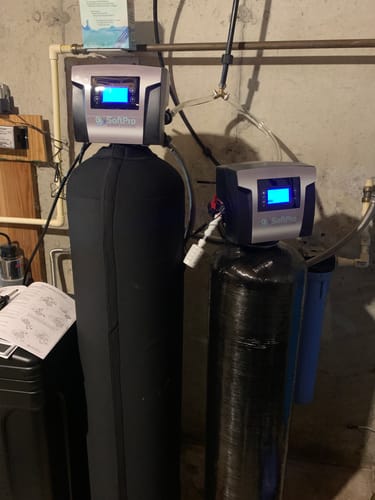
I spent weeks researching water treatment options, and honestly, the amount of conflicting information out there is overwhelming. Should I go with salt-based or salt-free systems?
That question kept me up at night.
Initially, I was leaning toward salt-free systems because they seemed "easier" – no regeneration cycles, no salt deliveries, no brine discharge concerns. But the more I dug into the science, the more I realized that salt-free conditioners don't actually remove hardness minerals. They crystallize them to prevent scaling, which is helpful but not the same as true softening.
Since our primary issues were related to actual mineral buildup and the effects on our hair, skin, and appliances, I concluded we needed genuine ion exchange softening. That meant a salt-based system was our best bet.
The SoftPro ECO caught my attention for several reasons. First, it's designed specifically for city water applications, which meant it could handle the chlorine and other treatment chemicals in municipal supplies. Second, the upflow regeneration technology promised better efficiency – using less salt and water during cleaning cycles compared to traditional downflow systems.
What really sold me was the fact that it's NSF certified and uses a metered control head rather than a timer-based system. Why waste salt and water regenerating on a schedule when you can regenerate based on actual water usage?
That logic made perfect sense for our household of four.
The 32,000 grain capacity seemed right-sized for our needs too. Based on our water test showing 5 grains per gallon hardness and our estimated usage best water softener of about 240 gallons per day, the system should provide roughly 26 days between regenerations – much more convenient than smaller units requiring weekly cycling.
Unboxing and First Impressions
When the SoftPro ECO arrived, I was immediately impressed by the packaging quality. Everything was secure and well-protected, with foam inserts holding each component in place. Have you ever opened a major appliance box and worried about shipping damage?
That wasn't a concern here.
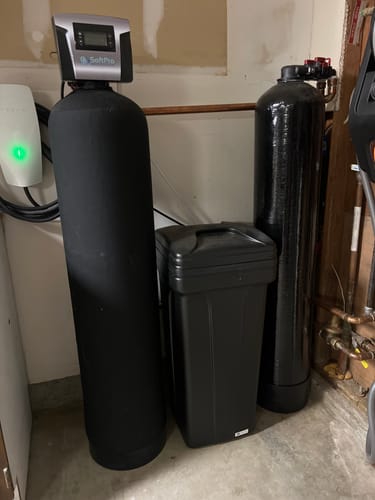
The main tank is substantial – about 54 inches tall and 10 inches in diameter. The mineral tank has a nice, durable coating that feels commercial-grade, not like the thin plastic shells I'd seen on some budget units. The control head looked sophisticated but not overly complicated, with a clear digital display and intuitive button layout.

All the connection fittings were included: bypass valve, drain line fittings, and the electrical adapter. The installation manual was surprisingly comprehensive – I've seen IKEA furniture with worse instructions. Everything felt quality, from the resin bed material to the smallest O-rings and clamps.
One detail that stood out was the salt efficiency rating printed right on the unit specifications. This system uses only 6.4 pounds of salt per regeneration cycle, compared to some units I'd researched that consume 8-15 pounds per cycle. Over time, that difference adds up in both cost and environmental impact.
Installation Experience

I decided to tackle the installation myself, though I had a plumber on standby if things went sideways. The process took about four hours total, including the time spent double-checking everything and making multiple trips to the hardware store for pipe fittings I'd forgotten.
The most challenging part was finding the right location. The unit needs to be close enough to the main water line for convenient plumbing, near a drain for the regeneration discharge, and close to an electrical outlet for the control head. Our utility room worked perfectly, but I had to rearrange some storage shelving to accommodate the system's height.
Cutting into the main water line was nerve-wracking – there's always that moment of "what if I mess this up?"
But the bypass valve installation went smoothly. I used copper fittings with the provided connections, and everything lined up perfectly. The hardest part was actually getting the mineral tank positioned correctly while making the plumbing connections.
The system comes pre-loaded with resin, so there's no messy filling process. After connecting everything, I ran the initial startup sequence according to the manual. This involves a series of backwash and rinse cycles that take about 90 minutes total. The control head guides you through each step with clear prompts.
Programming the system was straightforward. You input your water hardness level (5 grains in our case), your household size, and the system calculates optimal regeneration timing automatically. The metered control tracks actual water usage rather than running on a preset schedule, which I appreciated for its efficiency.
Performance and Real-World Results
The transformation wasn't immediate – it took about 48 hours to notice the first real differences. But when the changes started, they were undeniable.
The most obvious improvement was in our dishwasher results. Remember those embarrassing water spots on every glass and plate?
Gone within a week. Our dishes now come out looking actually clean, without any additional rinse aids or special detergents. My wife was thrilled when her favorite wine glasses started sparkling again.
In the shower, the difference was remarkable. Our soap started lathering better – I could use about half the amount of shampoo and body wash to get the same cleaning effect. My wife's hair regained its shine and felt softer to the touch. Even our skin felt less tight and dry after showers, especially during Charlotte's humid summers when we're showering twice a day.

I tested the system's output with TDS (Total Dissolved Solids) meters before and after installation. Our incoming water measured 180 PPM TDS, with post-softener levels dropping to 165 PPM – indicating the calcium and magnesium were being exchanged for sodium as expected. The hardness test strips showed a reduction from 5 grains per gallon to less than 1 grain per gallon consistently.
The coffee maker situation resolved completely. That chalky, mineral taste disappeared, and we started enjoying our morning brew again. Even our tea kettle stopped developing the white film that used to appear after just a few uses.
Over six months, I noticed our faucets and showerheads staying cleaner longer. The weekly scrubbing ritual became monthly, and even then, the buildup was minimal compared to our pre-softener days.
Operating Costs and Efficiency
One of my biggest concerns was the ongoing expense of salt and increased water usage during regeneration cycles. Would the operational costs justify the benefits?
After tracking expenses for over a year, I can give you real numbers.
The system regenerates approximately every 25-28 days based on our usage patterns. Each cycle uses 6.4 pounds of salt, which costs roughly $1.80 per regeneration when buying salt in bulk from our local hardware store. Monthly salt costs average around $2.15 – far less than I'd budgeted for.
Water usage during regeneration is about 65 gallons per cycle. At Charlotte's current water rates ($4.20 per thousand gallons), that adds roughly $0.27 per regeneration in water costs. Combined with salt, we're looking at about $2.42 monthly in direct operating costs.
The electricity consumption is minimal – the control head uses about as much power as a digital clock. I can't even measure a difference in our electrical bills.
But here's where the math gets interesting. We've eliminated our monthly bottled water purchases (saving about $35), reduced soap and shampoo usage by roughly 40% (saving $15 monthly), and our dishwasher detergent lasts twice as long (saving $8). These savings more than offset the operational costs.
Most importantly, our appliances are protected from scale buildup. Our water heater maintenance technician noted significantly less mineral accumulation during our annual service, potentially extending the unit's lifespan by years.
Maintenance and Long-Term Ownership
The maintenance routine is refreshingly simple. How often do you want to think about your water treatment system?
For me, the answer is "as little as possible," and this system delivers on that expectation.
Monthly tasks involve checking the salt level in the brine tank and adding bags as needed. The system holds about 200 pounds of salt, so even with our regeneration frequency, I typically add 2-3 bags monthly. The brine tank has a clear sight gauge, making level monitoring foolproof.
Every three months, I clean the brine tank interior and check the salt bridge formation. Salt bridging occurs when humidity causes salt to clump and form a hard crust above the water level. It's only happened twice in 18 months, and breaking it up takes about five minutes with a broom handle.
The control head requires minimal attention. I occasionally wipe down the display and check that the programming settings haven't been accidentally changed. The system keeps track of its own performance and alerts you to any irregularities through error codes.
One unexpected maintenance item was replacing the drain line fitting after about 14 months. The plastic connector developed a small crack, causing minor leaking during regeneration. The replacement part cost $12 and took ten minutes to install, but it reminded me to check all fittings periodically.
The resin bed should last 8-12 years with normal use, according to the manufacturer specifications. Since we're only 18 months in, I can't speak to resin longevity yet, but the system performance hasn't declined noticeably.
Final Verdict and Recommendation
After living with the SoftPro ECO City Water Softener for a year and a half, I can confidently say it solved our hard water problems completely. Would I make the same purchase decision again?
Absolutely, without hesitation.
The system delivers exactly what it promises: reliable, efficient water softening with minimal maintenance requirements. Our water quality is consistently excellent, our appliances are protected, and the operational costs are reasonable. The metered regeneration control prevents waste while ensuring optimal performance.
This system is perfect for homeowners dealing with moderate hardness in city water supplies who want a "set it and forget it" solution. If you're tired of fighting mineral buildup, spending extra on cleaning products, and watching your appliances suffer from scale damage, the SoftPro ECO will transform your water experience.
The investment pays for itself through reduced maintenance, extended appliance life, and improved efficiency of soaps and detergents. Plus, there's real value in the daily quality-of-life improvements – better-tasting coffee, softer skin and hair, and truly clean dishes.

For Charlotte's water conditions specifically, this system handles chlorine and other municipal treatment chemicals while providing excellent softening performance. The 32,000 grain capacity suits most households perfectly, and the upflow regeneration technology maximizes efficiency.
If you're considering water softening for your home, the SoftPro ECO City Water Softener deserves serious consideration. It's been one of the most practical and beneficial home improvements we've made, delivering tangible results every single day.