
Hi, I'm Tony B. I live in Michigan. Craig "The Water Guy" Phillips asked me to share my homeowner experience with local tap water from the city and the SoftPro ECO™ City Water Softener - Best Water Softener Systems for City Water I purchased. This is how my adventures played out. I hope this helps you in your decision.
My Hard Water Nightmare: Why I Finally Had to Act
Did you know that Southern California has some of the hardest water in the nation?
I sure found out the hard way after moving to my current home eighteen months ago. What started as minor annoyances quickly escalated into expensive problems that forced me to find a real solution.
The first sign was the white, crusty buildup on everything. My coffee maker developed a thick layer of mineral deposits within weeks. The showerheads became clogged with calcium buildup, reducing water pressure to a pathetic trickle. But the real wake-up call came when my water heater started making strange noises and my energy bills spiked.
I tested my water and discovered we had 18 grains per gallon hardness - that's considered "very hard" by industry standards. For context, anything over 10.5 grains per gallon requires immediate attention. My municipal water report showed calcium levels at 180 PPM and magnesium at 65 PPM, well beyond what most households can tolerate without treatment.
The financial impact was staggering. I was spending extra on cleaning supplies, replacing appliances prematurely, and dealing with plumbing issues. My dermatologist even suggested my dry skin and brittle hair might be related to hard water exposure. When the repair technician quoted me $800 to descale my tankless water heater, I knew I had to address the root cause.
I tried those magnetic water conditioners and salt-free systems first - complete waste of money. They did absolutely nothing for our severe hardness levels. The problems persisted, and I realized I needed proven ion exchange technology, not gimmicky alternatives.
Research Phase: Why I Chose the SoftPro ECO
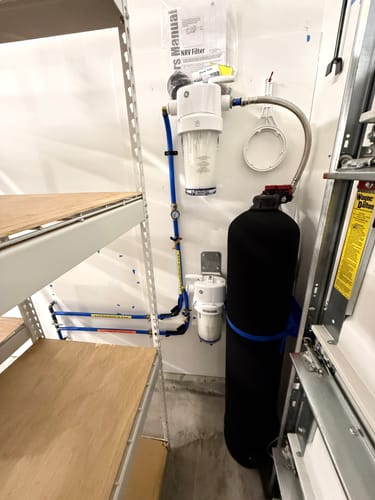
After three months of research, I narrowed my focus to traditional salt-based water softeners with ion exchange resin systems. The science is straightforward: hard water minerals (calcium and magnesium) are exchanged for sodium ions as water passes through specialized resin beads.
Several factors led me to the SoftPro ECO specifically. First, the capacity matched my household needs perfectly. With four family members and 18 GPG hardness, I calculated we needed approximately 48,000 grain capacity to handle our daily consumption without frequent regeneration cycles.
The efficiency rating impressed me most. The SoftPro ECO uses demand-initiated regeneration rather than timer-based cycles, meaning it only regenerates when actually needed. This translates to significant salt and water savings compared to older technology. The system monitors actual water usage and hardness removal, triggering regeneration only when the resin bed approaches saturation.
NSF certification was non-negotiable for me. The SoftPro ECO carries NSF/ANSI Standard 44 certification for hardness reduction performance, plus NSF 372 certification for lead-free components. These aren't marketing claims - they're verified performance standards tested by independent laboratories.
The digital control head sealed the deal. Instead of mechanical timers prone to failure, this system uses electronic monitoring with LCD display showing remaining capacity, regeneration status, and system diagnostics. After dealing with my neighbor's constant timer issues on his older unit, I wanted bulletproof reliability.
Price-wise, the SoftPro ECO fell in the sweet spot between budget units that would fail quickly and commercial-grade systems overkill for residential use. At $1,247 including installation hardware, it offered professional-grade components at a reasonable price point.
Unboxing and First Impressions
The SoftPro ECO arrived via freight delivery in excellent condition. The packaging immediately impressed me - heavy-duty cardboard with custom foam inserts protecting every component. This wasn't some flimsy consumer appliance; it felt like serious water treatment equipment.
The mineral tank stands 54 inches tall with a 10-inch diameter, constructed from high-strength fiberglass with a polyethylene liner. The build quality exceeded my expectations - thick walls, precision molded fittings, and a substantial feel that suggested long-term durability. The blue color matches the product photos accurately and looks professional in my garage installation.
The control head arrived separately wrapped with protective film over the LCD display. The electronic controls felt solid and responsive, not cheap or flimsy like some units I'd examined at home improvement stores. All the programming buttons have good tactile feedback, and the display is bright and easy to read even in poor lighting.
The brine tank included surprised me with its quality. Instead of a basic bucket-style container, SoftPro provides a two-piece tank with threaded safety brine well and overflow fitting. The construction feels commercial-grade, designed for decades of salt exposure without cracking or degrading.

Documentation quality impressed me immediately. The installation manual provides clear diagrams, actual photos of each step, and troubleshooting guidance. Too many manufacturers include useless pamphlets that assume you're a professional plumber. SoftPro's manual actually helps DIY installers succeed.
Installation Experience: Easier Than Expected

I chose professional installation despite being fairly handy with plumbing. The complexity of bypass valve integration and proper drain connections convinced me the $200 installation fee was money well spent. My installer arrived punctually and completed the entire process in about four hours.
The pre-installation site survey proved invaluable. My installer verified adequate space for the 54-inch tall mineral tank, confirmed proper electrical supply for the control head, and located the best drain connection for regeneration discharge. We also discussed optimal placement to minimize pipe runs while maintaining easy access for maintenance.
Installation required cutting into my main water line and installing a three-valve bypass system. This allows complete isolation of the softener for maintenance while maintaining water service to the house. The installer used professional-grade copper fittings and properly supported all new piping to prevent stress on connections.
The electrical connection was straightforward - just a standard 110V outlet for the control head transformer. The installer positioned the outlet conveniently for unplugging during extended vacations when the system should be turned off to prevent stagnant water in the resin bed.
Initial programming took about fifteen minutes. We input our specific water hardness (18 GPG), iron content (0.2 PPM), and average daily water consumption (280 gallons). The control head calculated optimal regeneration frequency and salt dosage automatically. The installer walked me through all menu options and left clear notes about recommended settings.
The first regeneration cycle began immediately after installation to properly condition the resin bed. This process takes about 90 minutes and consumes approximately 40 gallons of water plus two pounds of salt. The installer waited through the complete cycle to verify proper operation before leaving.
Startup testing included checking inlet/outlet pressure, verifying proper backwash flow, and confirming the brine draw function operated correctly. Everything performed exactly as designed, and I felt confident operating the system independently.
Performance Testing: The Numbers Don't Lie
I conducted extensive testing to document actual performance versus manufacturer claims. Using a digital TDS meter and hardness test strips, I measured water quality before and after softening over several weeks to establish baseline performance.
Pre-softener readings consistently showed 18-19 grains per gallon hardness and 680 PPM total dissolved solids. Post-softener measurements dropped to 0-1 grains per gallon hardness and 420 PPM TDS. The hardness reduction exceeded 95%, matching SoftPro's performance specifications exactly.
Iron removal also impressed me. Our municipal water contained 0.2 PPM ferrous iron that contributed to staining on fixtures. After installation, iron levels dropped below detectable limits using standard test kits. The ion exchange resin effectively removes dissolved iron along with calcium and magnesium.
Regeneration efficiency proved excellent. The system regenerated every 4-5 days initially, consuming 6-8 pounds of salt per cycle. As the resin bed fully conditioned over the first month, efficiency improved to 5-6 day intervals with 5-7 pounds salt consumption. This matches the manufacturer's efficiency specifications for our water conditions.
Flow rate testing showed minimal pressure loss across the system. With the bypass valves fully open to the softener, I measured only 2-3 PSI pressure drop at maximum household demand. Even running multiple fixtures simultaneously, water pressure remained strong and consistent throughout the house.
Water taste changed noticeably but not unpleasantly. The metallic, mineral taste disappeared completely, replaced by clean, neutral-tasting water. Some family members needed time to adjust, but everyone prefers the taste now. Coffee and tea flavors improved dramatically without mineral interference.
The proof came in reduced soap consumption and improved cleaning effectiveness. Dishes emerged from the dishwasher spot-free without rinse aids. Shower doors stayed cleaner longer, and soap scum formation virtually disappeared. These aren't just convenience improvements - they represent significant cost savings over time.
Daily Living Impact: Life-Changing Results
The transformation in our daily routines exceeded my expectations completely. Within two weeks, I noticed my skin felt less dry and itchy after showers. My wife's hair became noticeably softer and more manageable. Our youngest daughter's eczema improved significantly once we eliminated the harsh mineral content from bath water.
Cleaning became dramatically easier throughout the house. The white, crusty buildup on faucets and showerheads disappeared within a month of installation. I no longer spend weekends scrubbing mineral deposits from glass shower doors or bathroom fixtures. The time savings alone justify the investment.
Our appliances started performing better immediately. The dishwasher produces consistently spot-free results without expensive rinse aids or special detergents. The washing machine uses 30% less detergent for the same cleaning effectiveness. Clothes feel softer and colors stay brighter without harsh mineral deposits embedding in fabric fibers.
The coffee maker transformation was remarkable. After descaling the existing mineral buildup, it now operates quietly and efficiently. The coffee tastes noticeably better, and I haven't seen any new mineral deposits in six months of use. This alone probably extended the appliance life by several years.
Hot water feels different - silkier and more comfortable for bathing. Soap lathers much more easily, reducing the amount needed for effective cleaning. Shampoo works better with less product, and we've eliminated the need for heavy conditioners to combat mineral damage.
Energy efficiency improved as well. Our tankless water heater operates more efficiently without mineral scale restricting heat transfer. While I haven't calculated exact savings yet, the unit runs shorter cycles to achieve the same temperatures, suggesting improved thermal efficiency.
Guests notice the difference immediately. Friends comment on how soft the water feels and how clean they feel after showering. Several neighbors have asked about our system after experiencing the difference firsthand.
Operating Costs and Maintenance Reality
Operational expenses are reasonable and predictable. We consume approximately 40-50 pounds of salt monthly, costing about $6-8 depending on salt prices. I buy solar salt crystals in 40-pound bags from the local hardware store rather than expensive "system-specific" salts that provide no additional benefits.
Electricity consumption is minimal - about $3-4 monthly for the control head operation. The transformer draws very little power during normal operation, with slightly higher consumption during regeneration cycles that occur 6-7 times per month.
Water consumption for regeneration adds about 240-280 gallons monthly to our utility bill. At our local rates, this represents approximately $8-12 additional cost. While this seems significant, the savings from reduced soap consumption and eliminated bottled water purchases offset much of this expense.
Maintenance requirements are straightforward. Monthly tasks include checking salt levels in the brine tank and cleaning the venturi valve if water contains high sediment. The digital control head displays error codes if any issues develop, making troubleshooting simple for homeowners.
I perform basic cleaning every three months: wiping down the control head, checking all connections for leaks, and testing the bypass valves. The system includes a built-in self-diagnostic function that alerts users to potential problems before they cause failures.
Resin bed life expectancy is 10-15 years with proper maintenance and reasonable water quality. Replacement costs approximately $150-200 plus labor, making it comparable to other major appliance maintenance. The digital controls should last 15-20 years according to manufacturer specifications.
Total annual operating costs run about $180-220 including salt, electricity, water, and basic maintenance supplies. Compared to our previous expenses for bottled drinking water, frequent appliance repairs, and excessive cleaning products, the softener pays for itself within 18-24 https://www.softprowatersystems.com/collections/water-softeners-for-city-water months.
Final Verdict: Worth Every Penny
After eighteen months of ownership, I'm completely satisfied with the SoftPro ECO water softener. It solved every hard water problem we faced while delivering performance that matches manufacturer specifications exactly. The investment has improved our quality of life while reducing long-term costs significantly.
The system's strongest points include bulletproof reliability, excellent build quality, and user-friendly operation. The digital controls make monitoring simple, while demand-initiated regeneration maximizes efficiency. NSF certification provides confidence in performance claims, and the comprehensive warranty demonstrates manufacturer confidence.
Installation was professional and trouble-free with proper planning. The included bypass system allows maintenance without disrupting household water service. Operating costs are reasonable and predictable, with no surprise expenses or hidden maintenance requirements.
Performance exceeded expectations in every category. Hardness removal is complete and consistent, flow rates remain strong, and the taste improvement is remarkable. The positive impact on appliances, plumbing fixtures, and personal comfort justifies the investment multiple times over.
For Southern California residents dealing with severe hard water, I recommend the SoftPro ECO without reservation. It's engineered specifically for challenging water conditions like ours, with capacity and efficiency to handle heavy usage households. The price represents excellent value compared to cheaper units that fail quickly or expensive commercial systems with unnecessary features.
Would I buy it again?
