
Hi, I'm Shawn M.. I live in Ohio.
Craig "The Water Fluoride Filtration Guy" Phillips asked me to share my experience as a homeowner with the SoftPro Fluoride & Chlorine SUPER Filter (Whole House Catalytic Bone Char Carbon Filter) I purchased.
This is how my adventures played out. I hope this helps you in your decision.
Eight months ago, I was dealing with water that tasted like a swimming pool and left my family questioning what we were actually drinking. The chlorine smell hit you the moment you walked into our bathroom after someone showered, and I'd grown tired of buying bottled water for cooking. My wife kept mentioning how her skin felt dry and itchy, especially during winter months.
After researching whole house water filtration systems for weeks, I kept coming back to the SoftPro Fluoride & Chlorine SUPER Filter. The combination of catalytic carbon and bone char technology seemed like exactly what we needed to tackle our municipal water issues. What really sold me was the built-in bypass valve and the fact that it came with an insulation sleeve – those practical touches told me the manufacturer actually understood real-world installation challenges.
The Water Quality Problem That Started Everything
Our municipal water in Ohio isn't terrible by national standards, but it's heavily treated with chlorine and fluoride. I tested our incoming water and found chlorine levels at 2.8 ppm – well within EPA guidelines but definitely noticeable in taste and smell. The fluoride levels were around 0.7 ppm, which some families prefer to reduce.
What really bothered me was the daily impact on our household.
My morning coffee tasted off, no matter which beans I used. My wife's naturally curly hair became increasingly dry and brittle. Our teenage daughter started complaining about skin irritation after showers. Even our houseplants seemed less vibrant when watered with straight tap water.
I'd tried various pitcher filters and even installed an under-sink system in the kitchen, but these point-of-use solutions only addressed drinking and cooking water. The chlorine in our shower water and the overall household water quality remained problematic. We needed something that would treat water at the point of entry – before it reached any fixture in our home.
The breaking point came during a dinner party when one of our guests politely asked if we had any bottled water because the tap water "tasted a bit strong."
That's when I knew we needed a whole house solution.
Why I Chose SoftPro's Catalytic Bone Char System
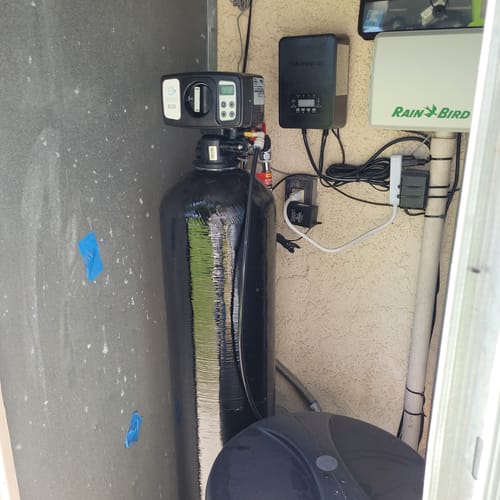
After comparing different filtration technologies, I learned that catalytic carbon excels at chlorine removal while bone char specifically targets fluoride – exactly the combination we needed. Standard activated carbon filters can remove chlorine, but they don't address fluoride effectively. Reverse osmosis works but wastes significant water and requires extensive maintenance.
The SoftPro system offered several advantages that convinced me:
The catalytic carbon operates through an enhanced oxidation process that breaks down chlorine and chloramines more effectively than standard carbon. This means longer filter life and more consistent performance. The bone char component uses a natural phosphate-based media that attracts and removes fluoride through ion exchange.
I appreciated that the system could handle our household's 15 GPM peak demand without pressure drops. The 1.5 cubic foot capacity seemed right-sized for our family of four, with the manufacturer estimating 500,000 gallon capacity before media replacement.
The built-in bypass valve was crucial for maintenance, and the insulation sleeve showed attention to preventing condensation issues in our basement installation. These practical engineering touches suggested a manufacturer that understood real-world applications.
Unboxing and First Impressions
The system arrived in sturdy packaging with each component individually wrapped. The main tank feels substantial – it's a true 10-inch diameter pressure vessel with a heavy-duty Clack control valve. The build quality immediately impressed me compared to some cheaper alternatives I'd researched.
Everything needed for installation was included:
The pre-loaded media (catalytic carbon and bone char blend), Clack WS1 control valve with bypass, insulation jacket, installation fittings, and comprehensive installation manual. The only additional purchases needed were standard plumbing fittings specific to my existing configuration.
The control valve features a simple manual interface – no complex programming or electronic components that might fail. The bypass valve operates smoothly and provides full flow when engaged for maintenance.
One pleasant surprise was the compact footprint.
At 54 inches tall and 10 inches wide, it fit perfectly in the corner of our basement utility room without overwhelming the space.
Installation Experience and Setup

I installed this system myself over a weekend, though I have moderate plumbing experience. The process involved cutting into the main water line after the meter and pressure tank, installing the bypass loop, and connecting the system.
The most challenging aspect was ensuring proper support for the system's weight – approximately 200 pounds when filled with media and water.
I installed a concrete pad and used the manufacturer's tank saddle for additional stability.
Plumbing connections are straightforward 1-inch NPT fittings. The control valve mounts directly to the tank top with a secure threaded connection. I appreciated that the bypass valve is integrated into the control head rather than requiring separate bypass plumbing.
Initial startup involves slowly filling the tank while bleeding air from the system. The manual provides clear instructions for this process, which took about 30 minutes. Once filled, I ran the first backwash cycle to settle the media and remove any carbon fines.
Water pressure throughout the house remained excellent – I measured only a 2 PSI drop from municipal supply pressure.
The system operates silently during normal filtration, with only occasional sounds during the automatic backwash cycle that occurs weekly.
Performance Testing and Real Results
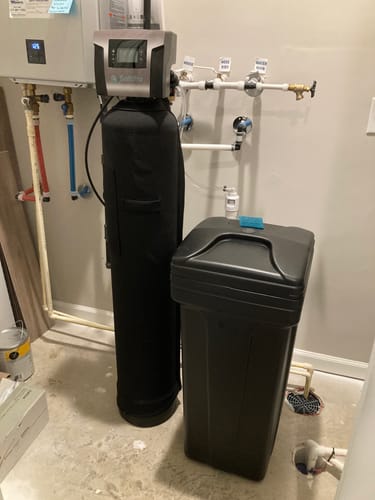
I tested water quality immediately after installation and have continued monthly testing to track performance. The results have been consistently impressive across all measured parameters.
Chlorine removal is essentially complete – from 2.8 ppm input to non-detectable levels post-filtration.
This translates to immediately noticeable improvements in taste and odor. Our morning coffee finally tastes the way it should, and the swimming pool smell is completely gone from bathrooms.
Fluoride reduction has been substantial, dropping from 0.7 ppm to approximately 0.2 ppm. While not complete fluoride removal, this represents a 70% reduction that satisfies our family's preference for lower fluoride levels.
pH levels remain stable at 7.2, and total dissolved solids stay consistent, indicating the system isn't removing beneficial minerals. This is important because we want filtration, not demineralization.
Flow rate performance has exceeded expectations.
Even during peak demand periods – simultaneous showers, dishwasher, and washing machine – pressure remains strong throughout the house. The 15 GPM rating appears conservative in our application.
Daily Life Impact and Family Benefits
The transformation in our daily water experience has been remarkable. Every family member has noticed improvements, often commenting on changes before I mentioned the new system.
My wife's hair health improved dramatically within two weeks.
Her natural curls returned to their normal softness and manageability. She's using less conditioner and fewer leave-in treatments to combat dryness.
Our daughter's skin irritation resolved completely. She can now take longer, hotter showers without the redness and itching that previously occurred. This change happened within the first month of operation.
Cooking and beverages taste significantly better. Our pasta water doesn't smell like chlorine, homemade soups have cleaner flavors, and even ice cubes taste neutral rather than chemically.
An unexpected benefit has been reduced soap and detergent usage.
Without chlorine interfering with soap chemistry, we're using about 20% less laundry detergent and dishwasher pods while achieving better cleaning results.
Even our houseplants show improvement. The fiddle leaf fig that struggled near our kitchen window has produced new growth since we started using filtered water for plant care.
Operating Costs and Maintenance Reality
After eight months of operation, I have a clear picture of the ongoing costs and maintenance requirements. The system is refreshingly low-maintenance compared to other filtration technologies I researched.
The automatic backwash cycle occurs weekly and consumes approximately 50 gallons of water.
This represents less than $1 per week in additional water costs for our area. The backwash removes accumulated contaminants and prevents channeling in the media bed.
Media replacement is projected every 5-7 years based on our water usage and quality. Replacement cost for the catalytic carbon and bone char blend is approximately $400-500, making annual operating costs quite reasonable at around $75-100 per year.
No electricity is required – the system operates entirely on water pressure. This eliminates electrical costs and potential electronic failures that plague more complex systems.
The only regular maintenance is monitoring the control valve and checking the bypass operation annually.
I've had zero issues requiring service calls or technical support. The simplicity of the mechanical control valve contributes to reliable operation.
When compared to our previous bottled water purchases (approximately $40 monthly), the system will pay for itself within three years while providing superior convenience and whole-house coverage.
Final Assessment and Buying Guidance
After eight months of ownership, I'm thoroughly satisfied with the SoftPro Fluoride & Chlorine SUPER Filter. It has delivered on every performance promise while proving reliable and low-maintenance in daily operation.
This system excels for households dealing with chlorinated municipal water who want whole-house treatment without complex technology.
The catalytic carbon and bone char combination effectively addresses the most common municipal water quality issues while maintaining good flow rates and pressure.
I'd recommend this system for families who notice chlorine taste or odor, experience dry skin or hair from showering, or prefer reduced fluoride levels. The capacity suits households with 4-6 people using normal amounts of water.
Consider alternatives if you have well water with iron or sulfur issues, need complete fluoride removal, or have very high flow rate requirements exceeding 20 GPM.
This system targets specific contaminants rather than providing broad-spectrum filtration for complex water chemistry problems.
The combination of effective performance, reasonable operating costs, and minimal maintenance makes this an excellent value in the whole house filtration market. I'd purchase this system again and have already recommended it to neighbors dealing with similar water quality issues.
Did you know that the average American household uses 300 gallons of water daily for drinking, cooking, bathing, and cleaning? Having high-quality water for all these uses – not just drinking – makes a significant difference in daily life quality that becomes apparent only after you experience it.